Understanding Romanian to English Certified Translation
In an increasingly globalized world, the need for accurate and certified translations has never been more critical. For individuals and businesses dealing with Romanian documents in the UK, understanding the requirements for Romanian to English certified translation is essential. This guide will provide you with comprehensive insights into what UK authorities require, ensuring your documents are accepted without any issues.
What is Certified Translation?
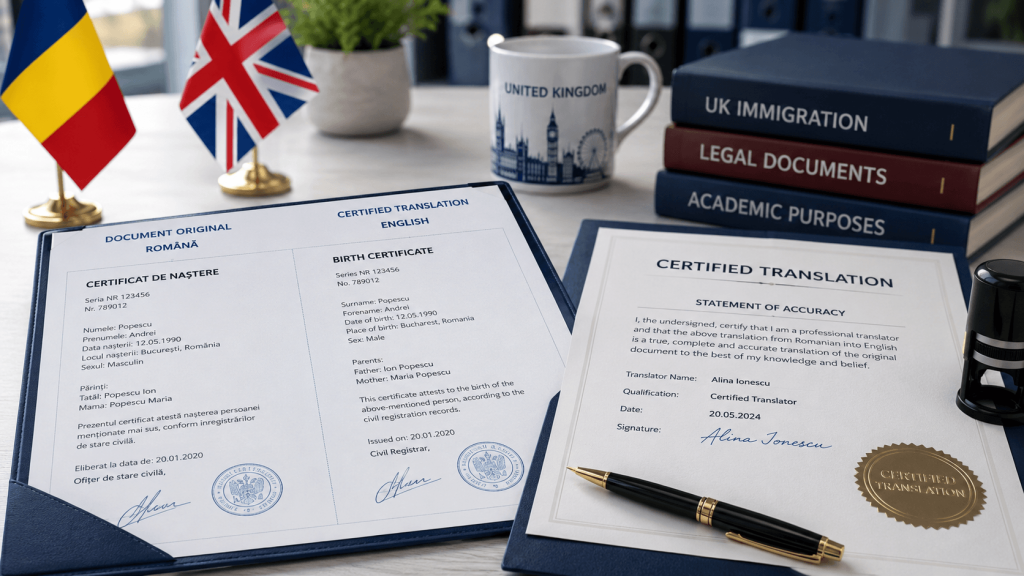
Certified translation refers to a translation that is accompanied by a signed statement from the translator or translation agency, affirming that the translation is accurate and complete. This certification is often required by government bodies, educational institutions, and legal entities.
Importance of Certified Translation
Certified translations are crucial for various reasons:
- Legal Acceptance: Many official documents must be translated and certified to be recognized by UK authorities.
- Accuracy Assurance: Certification guarantees that the translation is accurate, which is vital for legal and immigration processes.
- Professional Credibility: Using a certified translator enhances the credibility of your documents.
UK Authorities and Their Requirements
When submitting documents to UK authorities, it’s important to adhere to specific requirements for certified translations. Here are the key points to consider:
1. Who Requires Certified Translations?
Various UK authorities may require certified translations, including:
- UK Visas and Immigration (UKVI)
- Educational institutions for admissions
- Court systems for legal matters
2. Types of Documents Commonly Translated
Common documents that require certified translation from Romanian to English include:
- Birth certificates
- Marriage certificates
- Academic transcripts
- Legal contracts
- Immigration documents
3. Certification Process
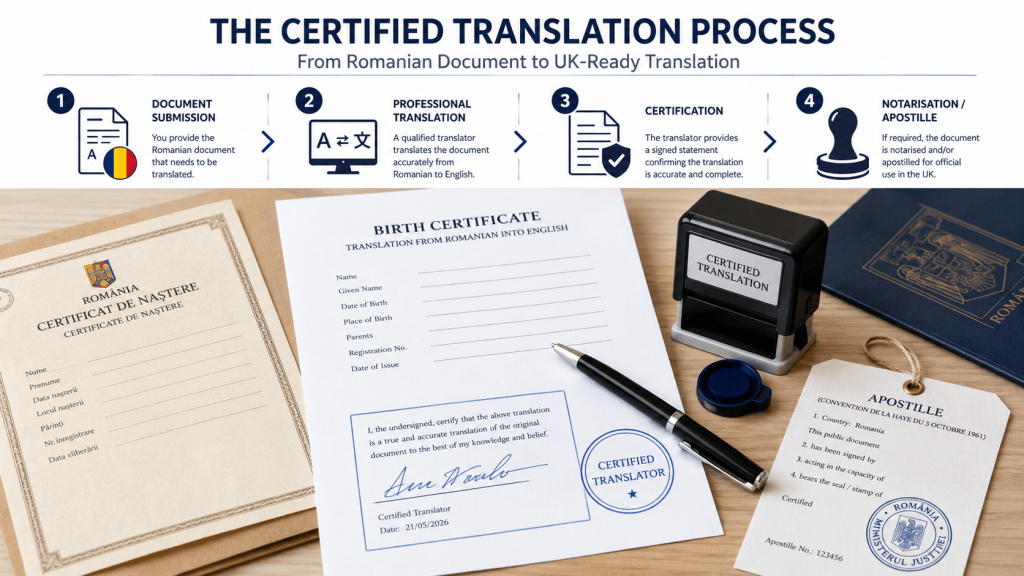
The certification process typically involves the following steps:
- Translation: The document is translated by a qualified translator.
- Certification: The translator provides a signed statement confirming the accuracy of the translation.
- Notarization (if required): Some authorities may require notarization of the certified translation.
Choosing a Certified Translator
Selecting the right certified translator is crucial for ensuring your documents meet UK authorities’ requirements. Here are some tips:
1. Qualifications and Experience
Ensure the translator is qualified and has experience in translating the specific type of document you need.
2. Accreditation
Look for translators accredited by recognized bodies, such as the Institute of Translation and Interpreting (ITI) or the Chartered Institute of Linguists (CIOL).
3. Reviews and Testimonials
Check reviews and testimonials from previous clients to gauge the translator’s reliability and quality of work.
Notarised vs. Certified Translation
While both notarised and certified translations serve to validate the accuracy of a translation, they differ in their processes:
1. Certified Translation
This involves a translator providing a signed statement of accuracy. It is often sufficient for most UK authorities.
2. Notarised Translation
This requires a notary public to verify the identity of the translator and witness the signing of the certification. This may be necessary for legal documents.
Apostille: What You Need to Know
An apostille is a form of certification that authenticates the origin of a public document. If your Romanian document is to be used in the UK, it may require an apostille to be recognized. Here’s what you need to know:
1. When is an Apostille Required?
An apostille is typically required for documents that will be used in legal proceedings or official matters in another country.
2. How to Obtain an Apostille
To obtain an apostille, you must submit your document to the relevant authority in Romania, which will then issue the apostille.
Common FAQs
1. What is the difference between certified and notarised translation?
Certified translation is a statement of accuracy from the translator, while notarised translation involves a notary public verifying the translator’s identity.
2. Do I need a certified translation for my visa application?
Yes, UKVI requires certified translations for all documents not in English.
3. How long does it take to get a certified translation?
The time frame can vary, but typically it takes 1-3 business days, depending on the document’s complexity.
4. Can I translate my own documents?
No, self-translations are generally not accepted by UK authorities. You must use a certified translator.
5. What documents require an apostille?
Documents that will be used for legal purposes in another country often require an apostille.
Conclusion
Understanding the requirements for Romanian to English certified translation is essential for ensuring your documents are accepted by UK authorities. By choosing a qualified certified translator and following the necessary steps, you can navigate the translation process smoothly. For assistance with your translation needs, contact us today to get a quote or start your project.